Easy Letter Crafts for Preschoolers That Build Fine Motor and Literacy Skills
Your kids need alphabet practice. You need activities that don’t take forever to prep.
Here’s the good news: you can teach the letters of the alphabet through simple, engaging crafts that build fine motor skills at the same time….and it doesn’t have to be complicated.
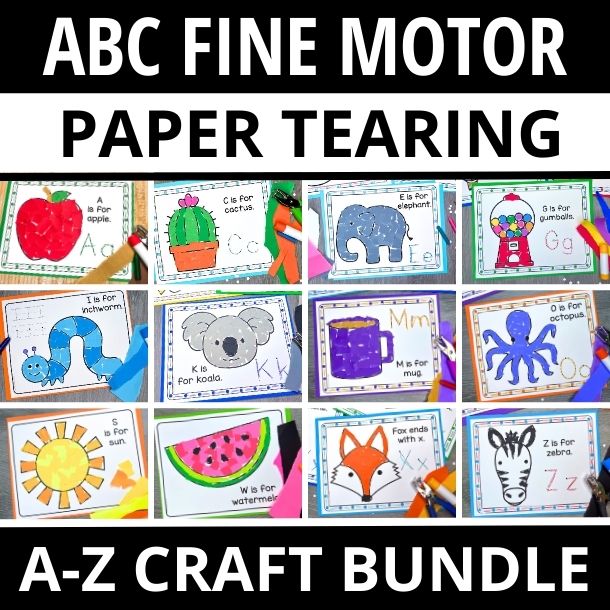
JUST Purchase the Alphabet Craft Bundle
No Time to Read The Whole Article?
Here are the quick links to purchase the ABC Craft Bundle today.
Why Hands-On Alphabet Crafts Work
There’s something about making a craft that keeps kids engaged longer than a worksheet ever could.
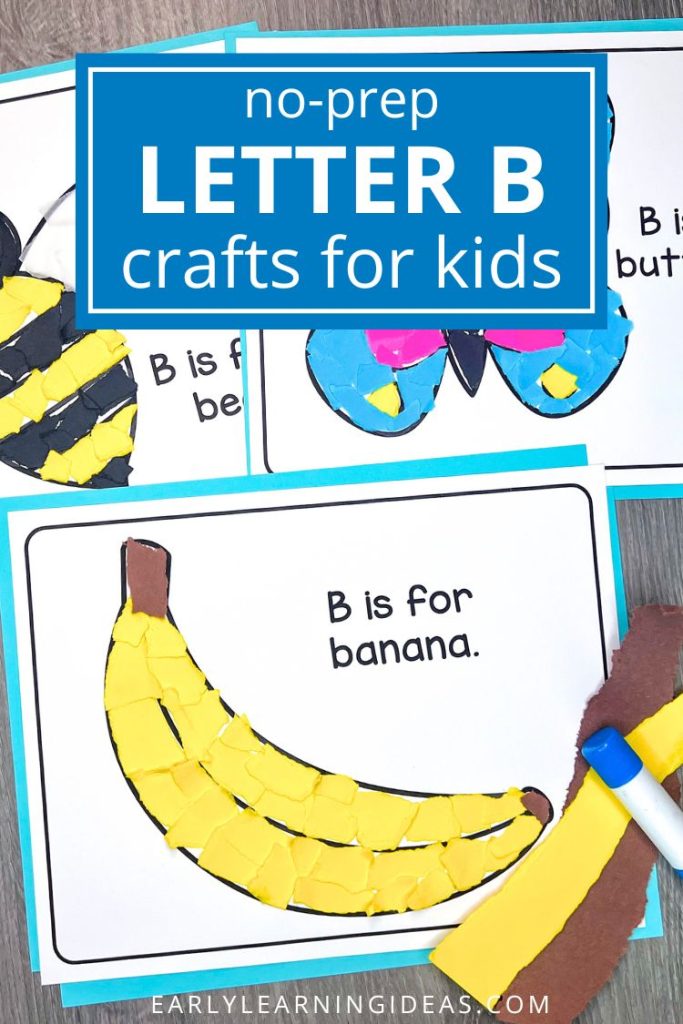
When kids can tear paper, glue pieces down, trace letters, and create something that feels like theirs, they’re more willing to practice challenging skills. They’re building hand strength, learning letter shapes, and connecting sounds to letters—all while having fun.

The key is choosing crafts that are simple to prep but rich in skill-building opportunities.
Building Skills Through Alphabet Crafts
Not all alphabet crafts are created equal. The best ones check off all the boxes of the Skill-Rich Craft Framework and hit three important areas at once. These letter crafts were designed to be skill-rich crafts!
The Skill-Rich Craft Formula
The next time you plan a craft, ask yourself if you will have:
Hands Working
Are kids completing meaningful fine motor steps?
Brains in Motion.
Are they thinking, planning, or making decisions?
Kids Who Care.
Do they feel connected to what they’re making?
If you answer yes, you’ve got a Skill-Rich Craft that will truly benefit your kids.
Hands Working – Fine Motor Practice

Kids need to do something with their hands to build strength and control. These alphabet crafts provide plenty of fine motor practice for your kids. While creating, their hands will be working on:
Tearing paper – This is a powerful pre-cutting skill. When kids tear paper, they’re building the bilateral coordination and hand strength they’ll need for scissor use. In fact, tearing is Step 1 of the Cutting Confidence Ladder—the warm-up that prepares little hands for cutting.
Gluing strategically – Placing torn or cut pieces onto specific areas requires precision, control and planning. (This puts their brain in motion too!)
Tracing letters – Building pencil control and learning proper letter formation. This set offers different options for letter and word tracing practice so you can select the option that works for your kids.
Hole punching – One of the best ways to build hand strength (the same muscles needed for scissor control and writing).
Brains in Motion – Literacy Learning
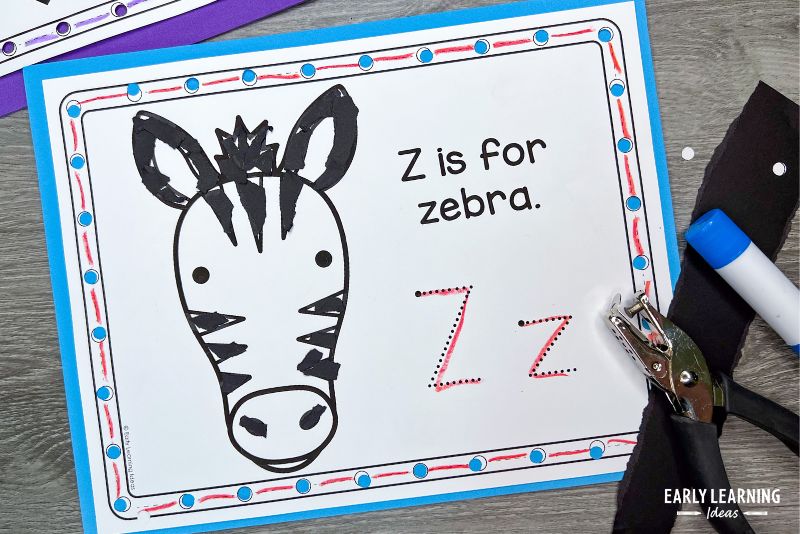
While kids are working with their hands, they’re also learning:
- Letter recognition (uppercase and lowercase)
- Beginning sounds (“A is for apple”)
- Letter formation (how to write each letter correctly)
- Visual discrimination (noticing the unique features of each letter)
Kids Who Care – Engagement and Choice

These easy letter crafts are fun and meaningful—so kids stay engaged and actually put in the effort that builds knowledge and strength.
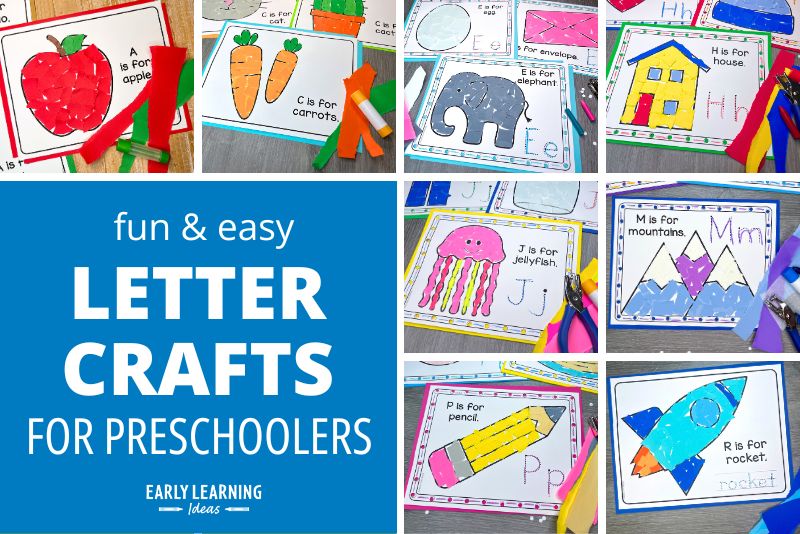
There are 3 image options for each letter of the alphabet, so you can give your kids a choice. If you let kids choose what interests them most, it will increase their engagement…and engaged kids practice longer.
Different Ways to Complete Alphabet Crafts
One of the things I love most about these simple letter craft templates is that they are sooo versatile. You can use the same pages in multiple ways depending on your kids’ needs, your classroom setup, or what materials you have on hand.
Paper Tearing
This is the classic approach—and my favorite for building pre-scissor skills. Paper tearing is actually the first rung on the Cutting Confidence Ladder.
Kids tear colorful construction paper or tissue paper into small pieces and glue them onto the letter or image. It’s calming, it’s sensory-rich, and it builds serious hand strength.
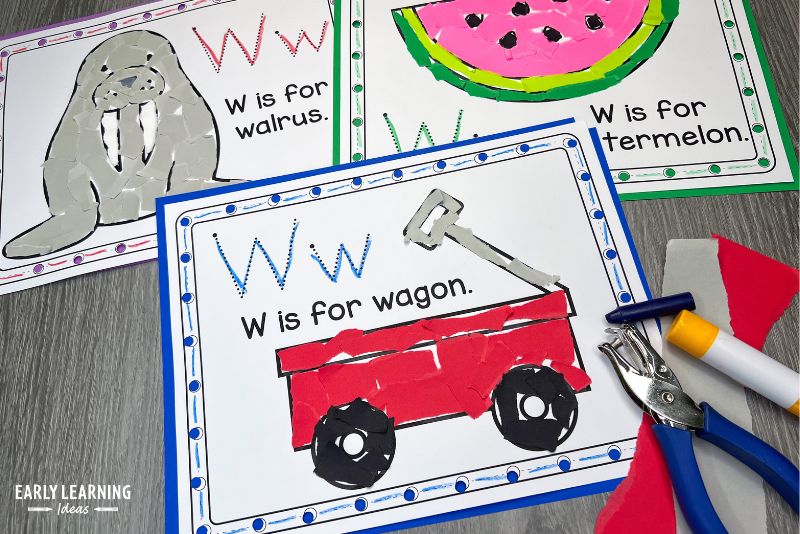
Pre-cut the paper into strips to make tearing easier for beginners. As kids get stronger, let them tear larger pieces.
Snipping and Pasting
Ready to add scissor practice?
Cut construction paper into thin strips (about 1 inch wide). Kids snip the strips into small pieces with a single cut, then glue them onto the image.
This is Step 2 of the Cutting Confidence Ladder—learning that open-close scissor motion without the pressure of cutting along a line. It’s perfect for kids who are just starting to use scissors.
Simple Coloring
Sometimes you just need something quick and easy.

Kids color the letter and image with crayons or markers. It’s straightforward, requires minimal setup, and still gives kids practice with letter recognition and fine motor control.
Painting
Add a little more sensory fun with paint.
Use watercolors, tempera paint, or even dot markers. Kids love the experience, and it builds hand strength as they control the brush or dauber.
Mixed Media
Let kids get creative by combining methods. Give them markers, crayons, glue, paper, scissors and more. Giving kids this kind of creative freedom makes the activity feel special.
Hole Punch Borders
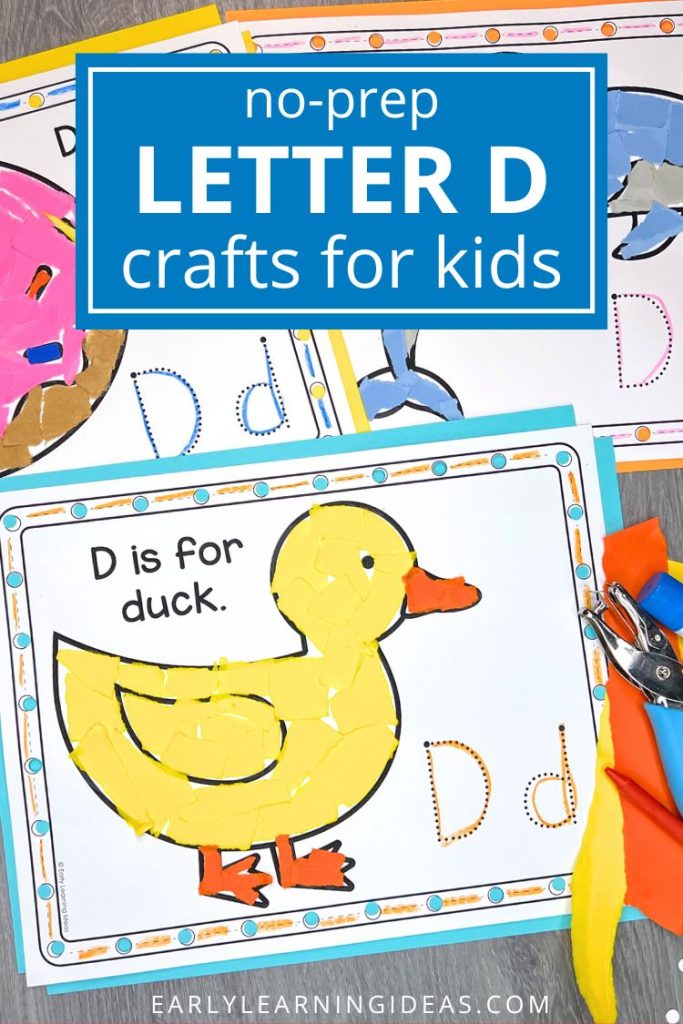
If you’re looking for a serious hand-strengthening activity, try pages with hole punch borders. Each image includes an option with a hole punch border.

Kids trace lines around the image, then use a hole punch to punch out circles along the border. Hole punching is one of those underrated fine motor activities—it works the muscles kids need for scissor control and writing.
How to Use Alphabet Crafts in Your Classroom
These simple alphabet craft pages are incredibly flexible. Here are some ways teachers use them:
Literacy Centers
Print a few letters and rotate them through your alphabet or fine motor centers. Kids can work independently or with a partner.
Small Group Instruction
Use alphabet crafts during small group time for targeted letter practice. You can support kids who need extra help while they work on fine motor skills at the same time.
Morning Work or Early Finishers
Keep a stack of letter crafts ready for kids who arrive early or finish other work quickly. It’s meaningful practice, not just busywork.
Take-Home Practice
Send letter crafts home for extra practice. They’re simple enough for families to do together, and they reinforce what kids are learning at school.
Occupational Therapy Stations
The tearing, tracing, and hole punching make these perfect for OT or SPED fine motor practice.
Thematic Units
Choose images that match your current theme. Teaching about animals? Use the animal images. Learning about food? Pick those options.
ABC Books
Save completed pages throughout the year and bind them together to create a student-made alphabet book. Make a class book, or make books for each child. Kids love having a keepsake that shows all their hard work, and parents treasure them. The bundle even includes a cover page for your book!
Here’s a video to show you how I compiled the pages into a 3-ring binder to make a DIY alphabet book.
What Teachers Love About These Alphabet Craft Templates
Here are some reasons teachers love these simple abc craft templates:
- Multiple image options per letter – Gives kids a choice and lets you match images to themes or interests.
- Different page formats – Simple coloring pages for beginners, tracing pages for writing practice, fine motor border pages for hand strengthening.
- Black-and-white format – Saves ink and lets kids add their own color through tearing, painting, or coloring.
- Starting dots on letters – Helps kids learn proper letter formation from the beginning.
- Simple, clear images – Kids should be able to identify what the image is without confusion.

Purchase The Alphabet Craft Set Today
Are you ready to introduce these sime letter crafts to your routine?
The A–Z Tear Art & Letter Craft Bundle includes 26 complete letter sets (one for every letter of the alphabet) with multiple image options and page formats for each letter.
Teachers love that it’s no-prep and easy to differentiate. Kids love the variety and choice.
featured product
Ready to Get Started With These Easy Alphabet Crafts?
Check out this big bundle of A-Z letter craft templates.