How to Choose Crafts for Preschool and Kindergarten (That Actually Build Skills)
If you’ve ever wondered how to choose crafts for preschool and kindergarten that are actually worth your time? —You’re not alone.

Some educators swear by crafts. Others swear them off. Between the Pinterest-perfect projects and the pressure to fill the day with something engaging, it can be hard to know which crafts are truly beneficial for kids.
The truth is: crafts can be either powerful tools for learning or wasted time that adds little value. It all depends on how you choose them.
Let’s take a look at the common criticisms of preschool crafts, the real need for skill-building activities in early childhood, and how to confidently select crafts that support your students’ development using my simple framework: the Skill-Rich Craft Formula.
Why Crafts Have a Bad Reputation (And Sometimes Deserve It)
Let’s be honest: not all crafts are created equal.
Many educators and parents have valid concerns about traditional “product-based” crafts—the kind where everyone is expected to produce the same perfect turkey or snowman.
Common criticisms include:
- Too adult-directed. The teacher does most of the cutting, prepping, and positioning while kids just glue down pre-cut pieces.
- Focused on the perfect product. The goal is a cute final result, not the process of learning.
- No room for creativity. Kids copy an adult model with little choice or personal expression.
- Feels like a checklist. Activities feel more like boxes to check than meaningful experiences
Some educators even refer to these as “craptivities”—crafts that are cute but offer little developmental value.
I get it. I’ve seen these crafts. When kids aren’t doing meaningful work, they’re not building skills. When crafts are only about making something that looks “right,” we’ve missed the point entirely.
But that doesn’t mean we should throw out crafts altogether.
Why We Still Need Crafts in Early Childhood Classrooms
Despite the criticisms, there’s still a strong case for crafting in preschool and kindergarten—when it’s done well.
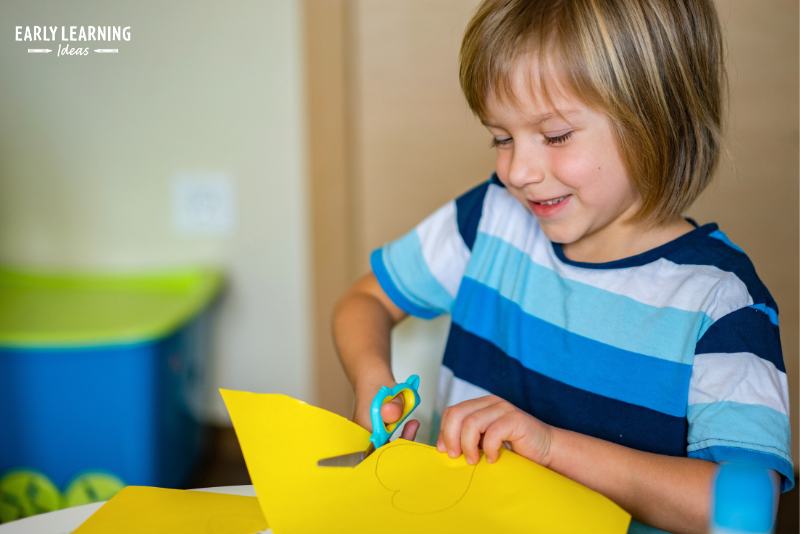
Many children today enter preschool with underdeveloped fine motor skills. Teachers across the country report challenges with:
- Holding crayons and pencils
- Using scissors effectively
- Completing basic self-care tasks like buttoning, zipping, or opening containers
Why? A combination of factors:
- Increased screen time in early years
- Less unstructured, hands-on play
- Fewer opportunities for real-life fine motor practice
Wanna know the good news? Crafts can help.
When children are motivated to complete a fun, purposeful craft, they’re willing to practice challenging skills like cutting, tearing, gluing, and tracing. The right craft doesn’t just pass the time—it builds foundational skills.
But not just any craft. It has to be the right kind.
How to Choose Crafts That Actually Build Skills
Enter: the Skill-Rich Craft Formula.
It’s my simple, three-part approach for evaluating whether a craft is truly helping kids grow. I use this framework for every craft I design, and it’s helped hundreds of teachers choose activities that actually matter.
HERE’S WHAT IT LOOKS LIKE:
🖐 + 🧠 + ❤️ = Skill-Rich Craft ……Now…Let me break down each part.
🖐 1. Hands Doing the Work
Kids should complete meaningful fine motor tasks themselves.

Look for Crafts That Involve:
- Cutting
- Tearing
- Folding
- Gluing with purpose
- Tracing or drawing
- Hole punching
- Assembling pieces
Now, let’s talk about the reality of teacher prep. Many preschool kids don’t have the skills to cut out all—or even most—of the pieces yet. And that’s okay! You’ll likely need to do some prep work.
The key is to look for crafts that give you options for fine motor practice.
Ask Yourself:
- Are there some simple pieces that kids can cut on their own?
- Can they snip along edges for texture?
- Are there other fine motor tasks built in—like tearing, pasting, tracing, or hole punching?
The goal isn’t for kids to do everything independently. The goal is for them to do something meaningful with their hands that builds strength and control.
Teacher Tip
Differentiate based on skill level. Beginners can snip pre-cut strips or tear paper. More advanced cutters can handle curved lines or full shapes. The same craft can work for multiple ability levels when you give kids the right entry point.
🧠 2. Brains in Motion
The best crafts get kids thinking—not just following directions. That might be academic thinking or process thinking. Both are valuable.

Academic Thinking:
- Name recognition
- Letters and sounds
- Counting or number concepts
- Sequence or order
- Thematic vocabulary or thematic connection
Process Thinking:
- Following steps
- Planning and sequencing
- Spatial awareness (where does this piece go? Does this fit here?)
- Problem-solving (how do I make this work?)
- Making choices (which color? which design?)
When kids make choices, plan, and follow steps, they engage far more deeply. They’re not just following directions—they’re thinking, deciding, and creating.
The same is true in the classroom. When crafts require kids to think—to figure out the order of steps, to match letters, to count pieces—they’re building cognitive skills alongside fine motor skills.
❤️ 3. Kids Who Care
If kids don’t care, they don’t engage. If they don’t engage, they don’t practice.
Children should feel connected to what they’re making.
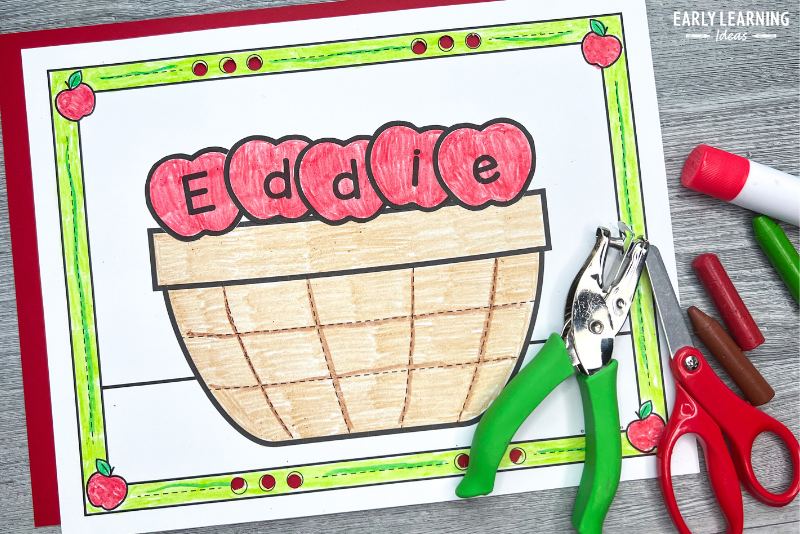
Kids care more when a craft:
- Includes their name
- Involves personal choice (color options, which stickers to use, how to decorate)
- Uses favorite themes (animals, holidays, food, pets)
- Allows creative expression
I’ve seen kids light up when they see their name on a craft. They take their time, try their best, and feel so proud of what they made. That pride matters. It’s what keeps them practicing. It’s what builds confidence alongside skill.
Engaged kids put in more effort—and that effort builds real skills.
Real-Life Examples of Skill-Rich Crafts
Here are a few craft activities that follow the Skill-Rich Craft Formula:
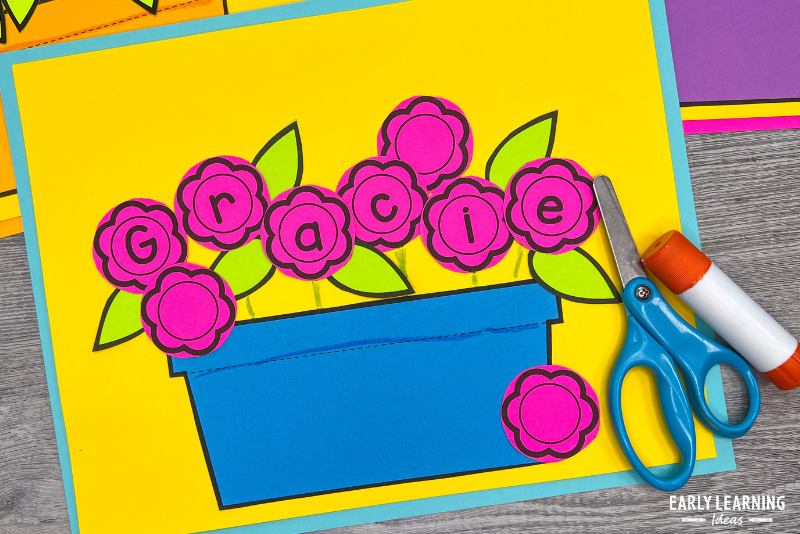
- 🖐 Kids cut out pieces and arrange them in order
- 🧠 They practice name sequencing and letter recognition
- ❤️ It includes their own name—personal and meaningful

- 🖐 Folding and cutting builds bilateral coordination
- 🧠 Kids follow multi-step directions and understand symmetry
- ❤️ The “reveal” moment is always exciting—they’re proud of what they created
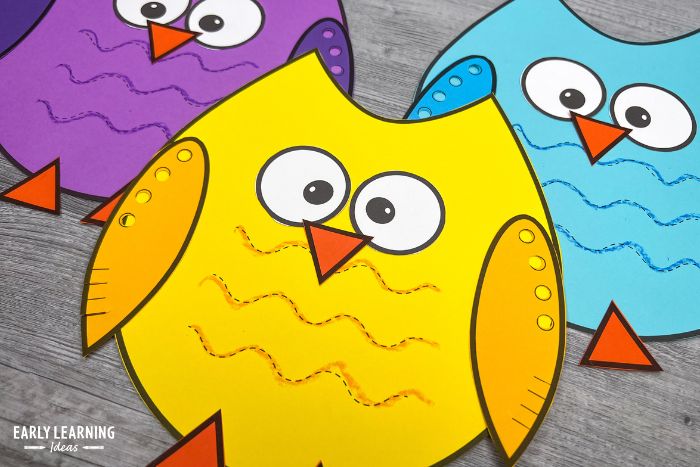
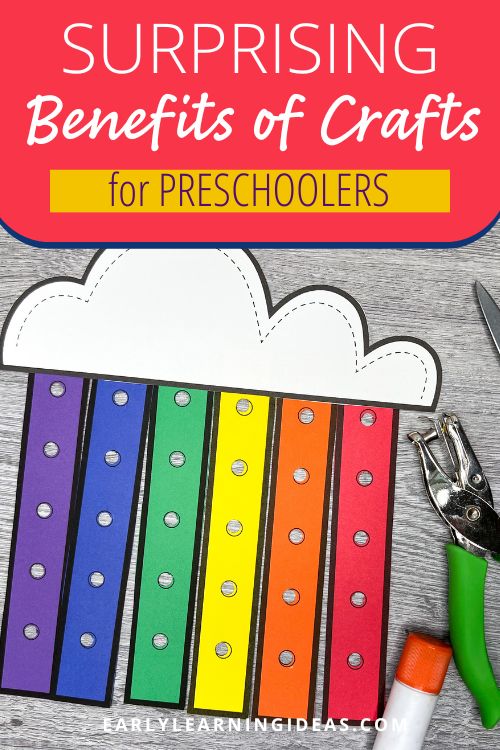
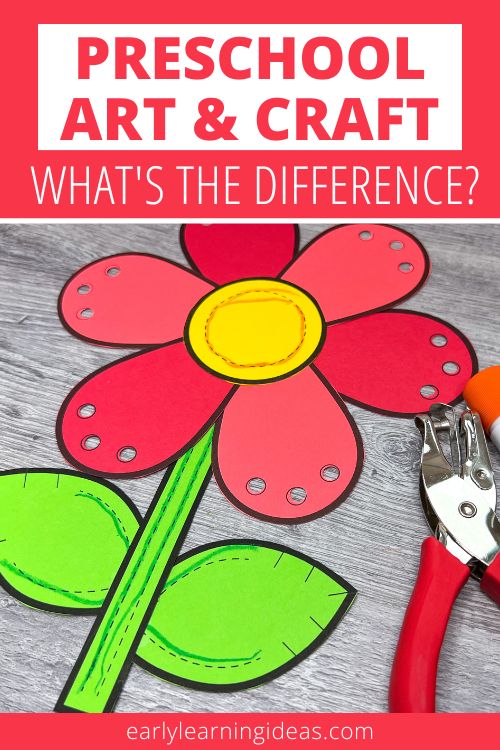
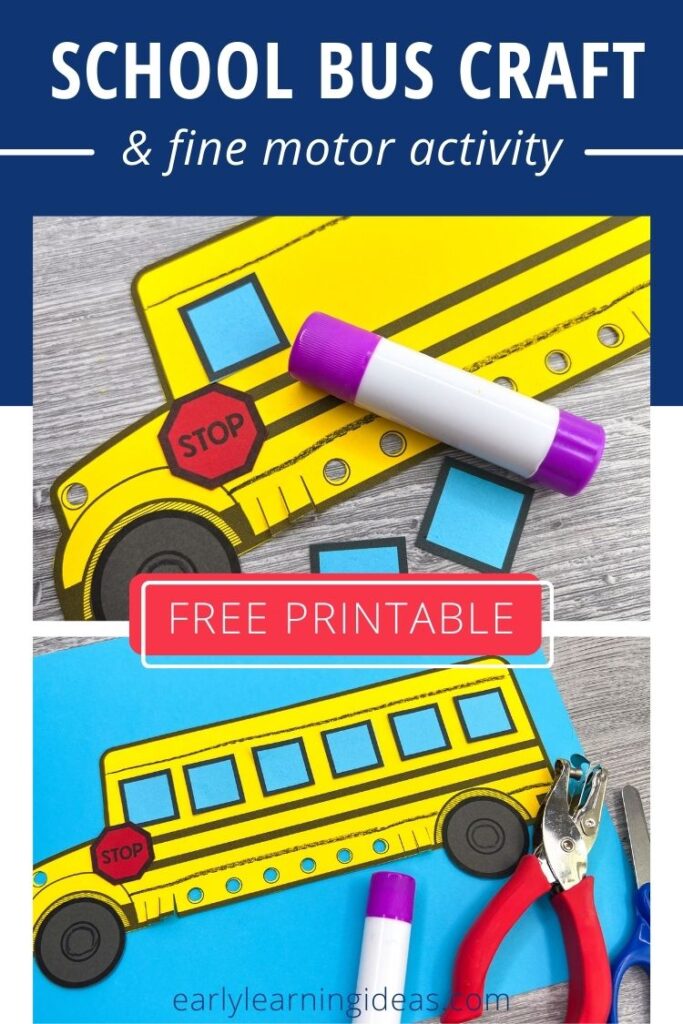
- 🖐 Kids cut, trace, and hole punch the pieces
- 🧠 Follow steps to assemble each part in sequence
- ❤️ Themes and decorating options make it fun and engaging
These aren’t just cute crafts. They’re crafts with purpose.
Do We Have to Choose Between Process Art and Crafts?
Absolutely not!
Process art is important. Kids need open-ended time to explore materials freely without a predetermined outcome. Painting, collaging, building, creating—all without worrying about what it “should” look like.
But that doesn’t mean you need to abandon crafts altogether. Both have a place.
Use process art for exploration and creative freedom.
Use Skill-Rich Crafts for fine motor development, sequencing, and structured thinking.
The key is balance—and intention. Know why you’re choosing each activity and what skills it supports.
You don’t have to pick a side. You can offer both.
Ready to Choose Crafts That Actually Build Skills?

Crafts don’t have to be busywork. With a thoughtful approach, they become powerful tools for developmental growth.
So the next time you plan a craft for your kids. Use this guide to help you.
The Skill-Rich Craft Formula
The next time you plan a craft, ask yourself if you will have:
Hands Working
Are kids completing meaningful fine motor steps?
Brains in Motion.
Are they thinking, planning, or making decisions?
Kids Who Care.
Do they feel connected to what they’re making?
If you answer yes, you’ve got a Skill-Rich Craft that will truly benefit your kids.
You don’t have to give up crafts. You just have to get smarter about how you choose them.
Want some done-for-you, Skill-Rich Craft Printables?
Check out my craft activities for preschool and kindergarten in my shop. Every activity is designed with this formula in mind—so you can feel confident that what you’re using actually works.
Craft Activities in My TPT Store
Craft Activities in My Website Store